
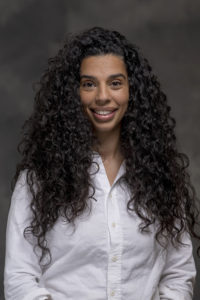
 This post was written by Hassna Ramadan, who attended the 2025 DLF Forum as the HBCU Students and Workers Fellow. The views and opinions expressed in this blog post are solely those of the author and do not necessarily reflect the official policy or position of the Digital Library Federation or CLIR.
Hassna Ramadan is the Digital Innovation & Access Services Librarian and Assistant Professor at Alabama State University’s Levi Watkins Learning Center, leading digitization, metadata, and access initiatives. Her work promotes equitable, user-centered digital collections that enhance access to HBCU history and culture. A 2025 DLF Forum Fellow, she is pursuing an Ed.D. in Applied Learning Sciences at the University of Miami and holds an MLIS from the University of Washington.
At Alabama State University’s Levi Watkins Learning Center, I spend my days living at the intersection of digitization, metadata, and access, trying to make sure our digital collections don’t just exist online, but actually reach the people who need them. As a Fellow at the 2025 DLF Forum, I expected to pick up practical ideas (and I did), however what I didn’t expect was how clearly one message would thread itself through so many conversations: digital work is people work, and safety and care have to be designed, not assumed.
That theme landed for me during the opening plenary with Dr. KáLyn Coghill, “Your Silence Will Not Protect You: A Clarion Call to Make Online Protection the Rule and NOT the Exception.” Dr. Coghill’s “Digital Community Garden” metaphor stayed with me because it shifts the question away from individual survival tactics (“just delete the app,” “ignore it,” “log off”) and toward collective responsibility. In a garden, the healthiest plants don’t thrive because they’re tough, they thrive because someone is paying attention. Someone is noticing harm early, naming what’s happening, and taking action to protect the space.
That framing made me think differently about the digital spaces I help shape at ASU. When we build digitization workflows, write metadata guidance, or design user interfaces, we’re also setting norms: what gets named, what gets hidden, what gets prioritized, and who feels welcome, or surveilled, when they arrive. “Online” isn’t separate from “real life.” The decisions we make about description, search, and access ripple outward into the offline world: who is visible, who is protected, and who is exposed.
I heard echoes of that in sessions on reparative metadata and harmful content statements. The conversation wasn’t simply “remove bad terms” (though sometimes that’s necessary). It was about giving users agency, documenting the iterative nature of description, and being honest about what harm looks like in both collections and metadata. If we want people to trust our collections, we can’t pretend neutrality protects anyone. We have to make our choices visible, explain our intent, and create pathways for repair.
I left DLF thinking less about new tools and more about presence, about noticing harm, naming it, and refusing to treat it as inevitable. Digital stewardship, at its best, is an act of care: care for people, for history, and for the futures our collections make possible. That care shows up in small, cumulative choices, and those choices are what ultimately determine whether our digital spaces can sustain trust.
DLF Forum 2025 reminded me that digital stewardship isn’t only about preservation and access. It’s also about sustenance, security, and care. And if we want our collections, and our communities, to last, we have to tend the garden together.